Machine translated · For reference only
Trapster Opens Its Creator Marketing Platform to Game Developers: Pay-Per-View Model Requires Setting a Promotion Budget in Advance
Russell · 资讯
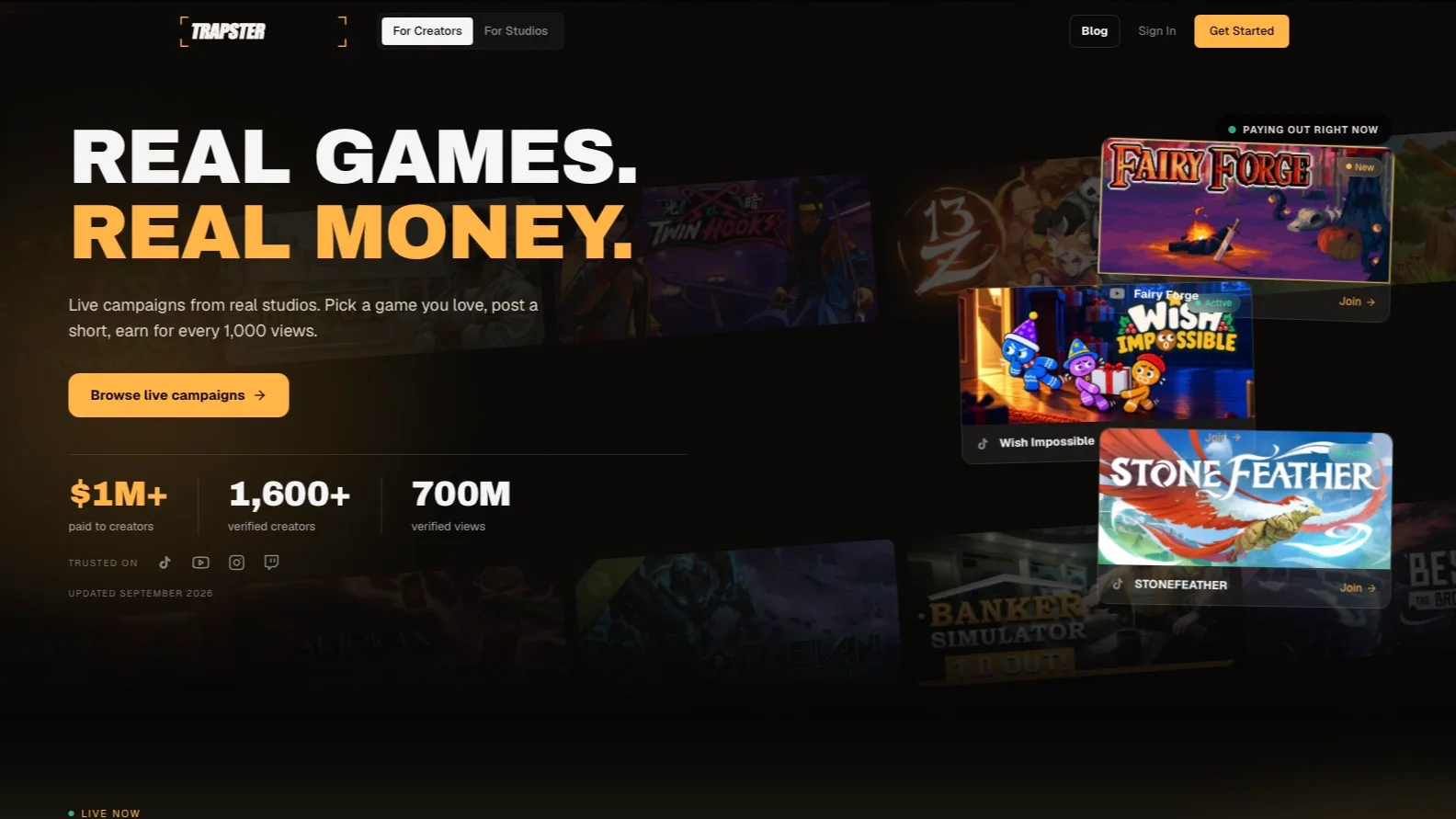
In late September 2026, Trapster launched a game promotion platform for the public. If a game studio wants to generate more attention for a new title, it can post its promotional needs and budget on a platform. Game video creators then select titles that interest them, play the games, and post review videos. The studio pays the promotion fees, and the creators are compensated based on the number of valid views their videos receive. [1][2]
Trapster hopes to address two challenges in game promotion: studios often struggle to find content creators whose style suits their games; and smaller content creators, even if their videos perform well, often have difficulty securing commercial partnerships. The platform focuses on a view-based payment model, allowing collaboration rates to be determined more by video performance than solely by the creator’s follower count.[1]
How can a studio launch a promotional campaign?
Studios need to enter game information, video requirements, and marketing budgets into Trapster, and set up CPM, which is the price per 1,000 valid views. Bloggers select campaigns, create content, and then post the videos on platforms such as TikTok, YouTube, or Instagram. Trapster is responsible for tracking and verifying view data, and settling payments based on that data. [1][2]
For a studio, purchasing views is only the first step in the promotion process. What they really want to see is for players to watch the video, learn more about the game, visit the store page, add it to their Steam wishlist, and ultimately purchase the game. Therefore, even if a video receives a large number of views, that doesn’t directly translate to an equivalent number of potential buyers.
If a video suddenly goes viral, will the costs spiral out of control?
This is the most common concern associated with pay-per-view models. According to Trapster’s terms of service, when studios create events, they mustFirst, set and pay your budget. The terms allow the studio to proactively increase the budget; if funds are insufficient, activities may be suspended. The publicly disclosed terms do not state that an increase in viewership would automatically trigger unlimited additional deductions. [3]
However, Trapster is not a platform where you can casually run tests for very little money. Its terms of service stipulate that activeThe minimum budget is $3,000 per platform.. In addition, the platform will charge a fee from the campaign budget 20% service charge...and only the remainder is used to pay the blogger. [3]
There is still one detail that needs to be clarified: If the campaign budget has been exhausted but views on previously published videos continue to increase, how will the excess be handled? The public terms and conditions do not provide sufficient detail on this matter. Before making a payment, the studio should request written confirmation from the platform.Does the budget include service fees? Will additional charges be applied once the budget limit is reached? And does the account have an auto-recharge setting?..
What promotional results has the platform announced?
Pavel Beresnev, co-founder and CEO of Trapster, told GamesBeat that during the platform’s invitation-only beta phase, prior to its public launch, there were 252 studios and more than 800 bloggersParticipation. The related promotional videos have collectively garnered more than 177 million views; The number of players participating in the game increased by more than 2 million wish lists.[1]
The “Fracture Point” case study on the Trapster website highlights a specific campaign: 50 bloggers posted 107 videos, which collectively garnered approximately 1.59 million views. The game was originally adding about 1,400 wishlist entries per day. Using this growth rate as a baseline, the developers estimated that during the two days following the promotion, wishlist entries increased by approximately 6,600 more than the original trend.[4]
These figures are useful for reference, but it is important to distinguish between **“growth during the promotion” and “growth directly attributable to the promotion”**. Wishlists may also be influenced by other promotional activities, community discussions, or store visibility. The publicly available case data is primarily provided by Trapster and participating parties; external readers cannot independently verify the source of each wishlist.
There are two other questions regarding the publicly available information.
The first one isData Definitions. Trapster's studio page, labeled "Updated September 2026," lists More than 1,600 bloggers, 700 million views, and 4 million wish lists...which is higher than the trial period data cited in a GamesBeat report from the same month. The two sets of figures may cover different time periods or scopes of activity, but the public page does not explain the discrepancy. [1][2]
The second location isLabeling Requirements for Paid Promotions. Trapster’s platform overview page states that content does not require sponsorship disclosures; however, the notes on its homepage and its Terms of Service require bloggers to disclose paid promotional relationships. These public statements are inconsistent, so studios and bloggers need to confirm how specific campaigns should be labeled before collaborating. [3][5][6]
Trapster offers a trading method that is easier to understand:The studio sets the budget, the blogger creates the video, and the platform pays based on valid views.. For teams planning to promote a game, determining whether it’s worth the investment still depends on whether the video reaches players who are likely to purchase the game, and whether the resulting increase in wishlists and sales can cover the total cost of the promotion.
References
[1] GamesBeat: Trapster Launch Coverage (https://gamesbeat.com/trapster-launches-creator-marketing-platform-for-game-makers-exclusive/)
[2] Trapster: Product Page for Game Studios (https://www.trapster.gg/for-studios)
[3] Trapster: Terms of Service (https://www.trapster.gg/tos)
[4] Trapster: "Fracture Point" Marketing Case Study (https://www.trapster.gg/case-studies/fracture-point)
[5] Trapster: Platform Overview (https://www.trapster.gg/about)
[6] Trapster: Home Page and FAQs (https://www.trapster.gg/)
评论
暂无评论