Machine translated · For reference only
Gameplay Validation, Store Page Launch, Wish List Growth, and Marketing Investment | A Post-Launch Review from the Developers of *Furnish Master*
Russell · 文化与观点
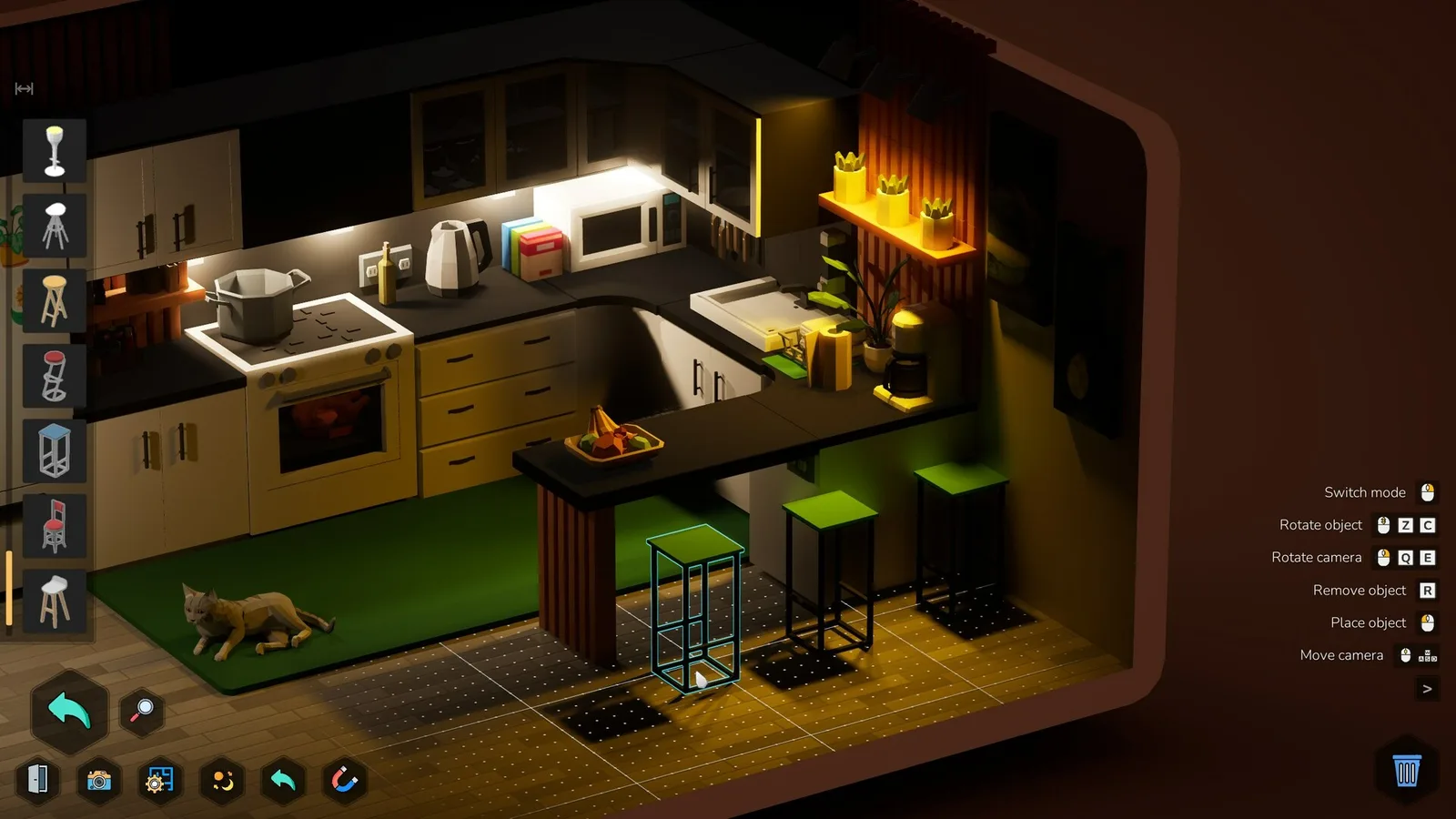
I recently came across a post on Reddit where a developer shared a post-mortem. His game, *Furnish Master*, had accumulated about 96,000 wishlists before its release and sold 100,000 copies during its Early Access phase. For an indie game developed primarily in his spare time over the course of about two years to achieve such results is certainly noteworthy. [1]
However, it wasn’t just the sales figures that caught my attention. Rather than presenting his post-mortem as a “follow-these-steps-and-you’ll-succeed” guide, the developer devoted a significant portion of the analysis to discussing his own mistakes: overemphasizing the wishlist, poor timing of ad spending, choosing an ill-suited release date to secure a showcase opportunity, and an average refund rate of about 17% due to operational and technical issues. [1]
In my view, these reflections are more worth examining than the fact that “100,000 copies were sold” itself. In this article, I’d like to take a closer look at exactly what he did, what worked, where he ran into problems, and how these lessons can benefit small teams.
"Furnish Master" certainly doesn't lack attention, but just because people are interested doesn't mean they'll buy it; and just because they buy it doesn't mean they'll be satisfied. After reading his post-mortem, I think the issues can be broken down into three layers:Whether a game looks appealing, is actually fun to play, and is worth paying for are three separate judgments that need to be evaluated individually.
First, let’s clarify the data sources: The 100,000 figure represents cumulative sales at the time of this article’s writing, not first-week sales; the approximately 96,000 wishlist entries are data from the time of EA’s release. These two figures cannot be directly used to calculate the conversion rate at launch. [1] Subsequent marketing efforts, new followers, and discounts will all affect the cumulative results; furthermore, revenue cannot be simply estimated based on the U.S. list price.
Build a demo version in a month to see if anyone is interested in checking it out.
The original idea for *Furnish Master* was to clean a room, and the developer built a prototype in a single night. He then realized that freely arranging a room held more potential, so he shifted the focus to a home-decorating sandbox game and completed a vertical slice and a demo video about a month later.[1]
Instead of waiting until the game was nearly finished to start looking for players, he posted gameplay footage on Reddit to gauge the reaction. As he himself put it, if those posts hadn’t garnered a positive response, he likely would have shut down the project and tried other ideas. [1]
He didn’t just look to see if anyone was praising the game; he also compared the number of likes and comments on other game posts in the same community and concluded that his post outperformed about 90% of the others. This figure is based on his personal observations rather than rigorous statistics, but it at least illustrates the criteria he uses to determine whether a project is worth continuing. [1]
He also specifically pointed out that these results only prove that the visuals and the gameplay shown are capable of attracting attention; they do not prove that the game itself is actually fun enough. [1]
I agree with this distinction. Beautiful visuals, smooth editing, and easy-to-understand gameplay do indeed make people stop and watch for a few extra seconds. But the shots in the video are carefully selected by the creator; the gameplay can be edited, and repetitive or cumbersome parts can be skipped. When players actually try the game themselves, they don’t have these conveniences.
So, just because the early videos perform well doesn’t mean the game has been validated. First and foremost, it answers the question: Are strangers interested in this direction, and is it worth continuing to invest in? As for how it plays, that still needs to be tested further.
For teams with limited time and budget, I think this step is well worth the effort. It’s better to start by testing a segment that showcases the game’s unique features—that way, you’ll have more room to make adjustments than if you invest two years only to discover that players aren’t interested.
For your first wish list, you don't necessarily have to wait until you've built up a large following.
On August 1, 2022, the developer launched the game’s Steam page. Since there was no official trailer at the time, he recorded a gameplay video, edited it briefly, and used it on the page. In the first three days, the game received about 2,500 wishlists, and in the first week, he recalls it reaching about 5,000; the main source of these was coverage from two or three Asian media websites.[1]
The official trailer wasn't completed until about two months later. [1]
I think the most valuable lesson to be learned from this experience is:You don't have to wait until all marketing assets are in their final form before you start validating demand.
This is exactly what I’ve been trying to emphasize: as long as gameplay footage can clearly demonstrate the game’s mechanics and spark players’ interest, and there’s a Steam page where players can learn more and add the game to their wishlist, you can go public—there’s no need to wait until the official trailer is finished. When the media covers the game, readers will have a place to go and won’t lose touch after watching the video.
So, you don’t necessarily have to grow your social media accounts first before you can start promoting your game. Even without a large following, you can still try to reach players through content, community discussions, and media coverage. Of course, his results aren’t guaranteed to be replicable for every project, and it certainly doesn’t mean that simply creating a page will automatically attract followers.
There are two things I care about most:Is there any content that new players can understand, and once they’re interested, where can they go to learn more about the game? It’s more practical to focus on these two things first than to simply wait for your account to reach a certain number of followers.
With such low costs for a wish list, why did the developer still regret it?
"Furnish Master" did not rely solely on organic reach. The developer subsequently ran a sustained campaign of X ads and also experimented with Facebook and Reddit. He disclosed pre-launch advertising expenses of $7,905.78, with an additional $2,000 spent on PR, bringing the total pre-launch cash outlay to approximately $11,550.[1]
In the initial advertising experiment, the estimated wish list cost for Twitter’s U.S. group was approximately $0.13, for the Europe and Asia groups it was approximately $0.34, and for Facebook’s “Design and Construction” interest group it was approximately $0.43. [2]
These figures look appealing, but they shouldn’t be used directly as a budget template for other projects. Some wishlist counts were estimated by multiplying UTM data by 1.7, while for Reddit, a multiplier of approximately two—based on developer observations—was used. He also acknowledged that there are discrepancies between ad platform click statistics and Steam’s click statistics, and that some ad groups lack separate tracking links. [2]
Therefore, these costs should be used only as a reference and not as precise figures. Some people search for the game themselves after seeing an ad, while others switch to their computers to add it to their wish lists; it’s certainly possible that some conversions are missed in tracking. However, to determine exactly how many are missed, you’ll need your own data to support that conclusion—you can’t simply apply his multiplier.
However, the developer’s subsequent reflection went beyond simply noting that “the statistics weren’t accurate enough.” He believed that the conversion of wishlist items generated by ads into actual sales was lower than expected and tended to lose effectiveness over time; part of the budget could have been set aside for PR efforts closer to the release date, or concentrated around promotional events and the launch window. [1]
"Cheap wish lists" do not necessarily mean "cost-effective customer acquisition."
My understanding is that adding something to a wish list indicates that a player was once interested in it, but it doesn’t mean they’re committed to buying it. Some people enjoy watching home renovation videos but don’t necessarily want to do the work themselves; others add items to their wish list early on but have forgotten about them by the time the product is released; and still others simply think the graphics look good but aren’t particularly eager to buy it.
Therefore, I don’t judge the effectiveness of an ad based solely on the cost per click or the average order value from wishlists. It’s important to consider where players come from, when they add items to their wishlists, whether they eventually make a purchase, and whether they request a refund.
However, I don’t think this means advertising is ineffective. As the developer mentioned, some media outlets and creators discover games through ads, which then generate further word-of-mouth.[1] It’s just that these sources influence one another, so you can’t attribute a specific growth spike entirely to a single channel and then simply add up the estimated contributions from each channel.
The wishlist is growing nicely, but the median playtime in the demo is only seven minutes.
I paid particularly close attention to the "Demo" section.
Developers first release the Itch.io version through the Discord community to gather initial feedback; they then release a Steam demo during SimFest, continue making adjustments based on player feedback, and prepare for the New Game Festival. [1]
According to the Demo post-mortem, the wishlist grew from approximately 42,000 to about 51,000 one week later; there were 8,857 active players, with an average playtime of 22 minutes, though the median was only 7 minutes. [3]
Looking at the wish list alone, the results look good. But when I see the playtime, I want to dig deeper to understand why players are leaving so quickly.
The developers explained that the demo at the time featured only one sandbox room and about 100 placeable items. Some players spent a long time creating beautiful rooms, while others grew bored fairly quickly. Players also reported that the controls were not intuitive enough; although some adjustments improved the controls, they did not significantly increase playtime. [3]
I don’t think a median playtime of seven minutes is enough to declare the demo a failure—after all, different games require different amounts of playtime. However, if a significant number of players leave quickly, it’s worth investigating why: Did they experience the core gameplay? Is it a lack of objectives, awkward controls, or a discrepancy between the actual experience and their expectations based on the trailer?
The value of a demo lies not only in generating more wishlist entries, but also in testing whether that interest can translate into an actual desire to play the game.
Especially with games like this that emphasize relaxation and free creativity—just because they look cozy doesn’t mean they’re easy to play. In the video, furnishing the room looks smooth, but if players are constantly adjusting the camera, searching for menus, and repositioning objects, the experience will be completely different.
This is also why I emphasized in my previous article the importance of releasing a demo well in advance of the New Releases Festival. Let new players try the game first, allowing time to gather feedback and make adjustments before participating in the festival. I don’t want to wait until traffic surges to discover issues that could have been resolved earlier.
The New Arrivals Festival generated 10,000 wish lists, but this wasn't achieved by the campaign alone.
While preparing for the 2024 Winter New Product Festival, the developer purchased PR services from Terminals.io and increased the X advertising budget. He recorded approximately 10,000 new wishlists during the event, but the first-week review also clearly noted that this growth was driven by both advertising and PR and could not be entirely attributed to the New Product Festival. [1][4]
What I'd really like to learn here is,How did he manage to align the demo, media promotion, and advertising around the same key milestone, rather than focusing on the figure that “participating in the New Product Festival can increase the wish list by 10,000”?
When players see a demo they can play, and the media and creators have content to showcase, these preparations all work together. If you simply sign up for the event without making other preparations, it’s hard to expect the same results.
Before the launch, he chose a specific release time to extend the duration of the “Popular Upcoming” feature, ultimately securing four days of front-page exposure and approximately 10,000 additional wishlist additions; however, the corresponding times in the U.S. and Europe were less than ideal. Later, he speculated that a more appropriate time might have been better for initial sales and organic exposure, though he acknowledged that this was merely hindsight. [1]
I think his mistake this time serves as a reminder to us that:The wish list is an intermediate metric; ultimately, it all comes down to sales and player satisfaction. When choosing a release date, you can’t just focus on getting a few extra days of exposure; you also need to consider whether it’s convenient for players to purchase the game, whether media coverage can be coordinated, and whether the team has someone available to address any issues promptly.
Despite selling a total of 100,000 copies, the developer has suspended ongoing distribution.
The growth of *Furnish Master* didn't stop at its launch.
In August 2024, a creator’s TikTok video went viral, and the developer reported approximately 6,000 sales within a few days. Other creators subsequently posted content, further amplifying the reach, and sales remained near the levels seen during the previous discount period for the next five to six months. A Daily Deal in March 2025 generated approximately 4,000 sales in about 24 hours.[1]
This shows that the initial release isn’t the end of the promotional effort. Even after the game launches, it can still reach new players through creators, updates, discounts, and platform events.
But that doesn’t mean all teams should focus exclusively on TikTok. While the developer cited creator videos as the channel with the greatest impact, Reddit helped him decide early on whether to continue production, and the media generated the first wave of wishlist entries. [1] In my view, channels should be considered within the context of specific stages. Just because a particular platform generates the most sales later on doesn’t mean that’s the only platform a project should focus on when it’s just getting started.
However, even as sales increased, product issues persisted, and refunds were one of the direct consequences.
The developer reported that the refund rate was approximately 18%–21% in the early stages, later dropping to about 15%–18%, with an average of about 17%. The main issues included UI/UX, camera controls, item placement, bugs, and performance on low-end devices. [1]
He specifically pointed out that the target audience isn’t limited to hardcore gamers with high-end computers.[1] For a room-decoration game, whether players can comfortably play the game on their own devices clearly has a more direct impact on post-purchase reviews than the visuals shown in promotional videos.
So I think,The user experience and performance are, in and of themselves, part of the business conversion process. Players come here to relax and be creative, but instead they end up constantly struggling with the camera, menus, and placement controls—and this isn’t just a technical issue that can be fixed later.
Faced with refunds, the developer chose to pause regular advertising campaigns to focus on updates and fixes first, and then ramp up promotion once the product is more polished. [1] I think this decision makes perfect sense: While it would take a detailed analysis to determine whether the ads are actually losing money, given that many players are purchasing and then requesting refunds, the priority should be addressing why they’re unwilling to stay—rather than continuing to increase the number of buyers.
Conclusion: The most valuable lesson to learn is the verification sequence.
After reading the post-mortem for *Furnish Master*, what I’d most like to emulate is their approach to phased validation, rather than the CPM rates on any particular platform.
He first used his demo to gauge whether anyone was interested, then reached out to more players through the Steam page, the demo, and promotional efforts, and continued to seek new opportunities for promotion even after the game’s release. [1] While there are lessons to be learned from this approach, the pitfalls he encountered also illustrate that positive results in the earlier stages cannot replace validation in the later stages.
For small teams, I think the most practical approach is to break the problem down into separate parts: Is anyone willing to watch the video? Is anyone willing to keep playing the demo? And does the paid version provide good value for those who buy it?
Furthermore, the budget shouldn’t be viewed solely in terms of money spent. In the tables, the developer lists cash expenditures for their own development as zero while also estimating the value of their time; since the total amounts and the breakdown criteria are inconsistent, this should not be directly copied into a cost template. [1] Just because wages haven't been paid doesn't mean there are no costs associated with development time.
When time and budget are limited, honest feedback can help us decide what to do next: whether to continue promoting the game or to focus on improving the player experience first. It’s certainly worth building up a wish list, but when players have already come to the game only to quickly leave or request a refund, the most urgent priority at that point may not be to find more players.
Cumulative sales of 100,000 copies show that this game has indeed found its market. But what stuck with me most after reading the article were the players who didn’t stick around. For us, who are also developing games, these issues are worth examining more closely than just a impressive sales figure.
This article is based on the developer’s publicly available post-campaign analysis and accompanying materials. The data represents historical results disclosed by the developer and does not reflect current sales figures or general industry standards; the analysis and recommendations reflect my personal views. Regarding ad attribution, certain timeframes, and budgets, there are discrepancies between the author’s statements and other sources, and these are not treated as definitive conclusions in this article.
Sources
[1] https://grizzly-trampoline-7e3.notion.site/Furnish-Master-EA-100k-sales-1a0e2a4b318d8014b4bbcc3f91389384 [2] https://grizzly-trampoline-7e3.notion.site/86abdf371ea846f0a170c4f0b4548880 [3] https://grizzly-trampoline-7e3.notion.site/c7847e9170d44780b9b411b3a40db4f8 [4] https://grizzly-trampoline-7e3.notion.site/da4944e268424dfd99f8b7edcdbcfaa0
评论
暂无评论